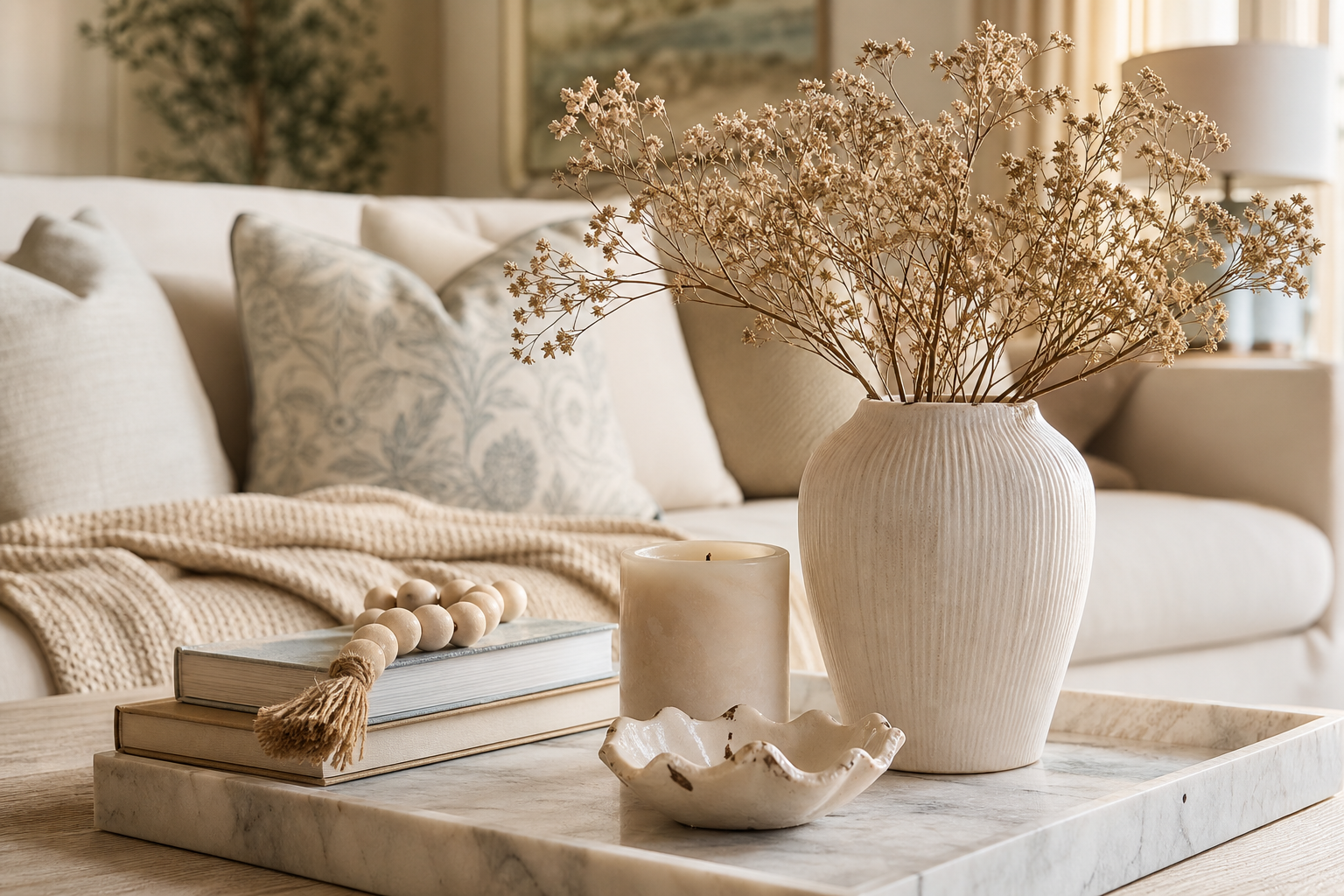
The Pretty Practical Playroom Edit: Stylish Storage That Does Not Look Like a Daycare
Stylish Amazon-friendly playroom storage ideas for a calm, kid-friendly space that still feels like the rest of your home.
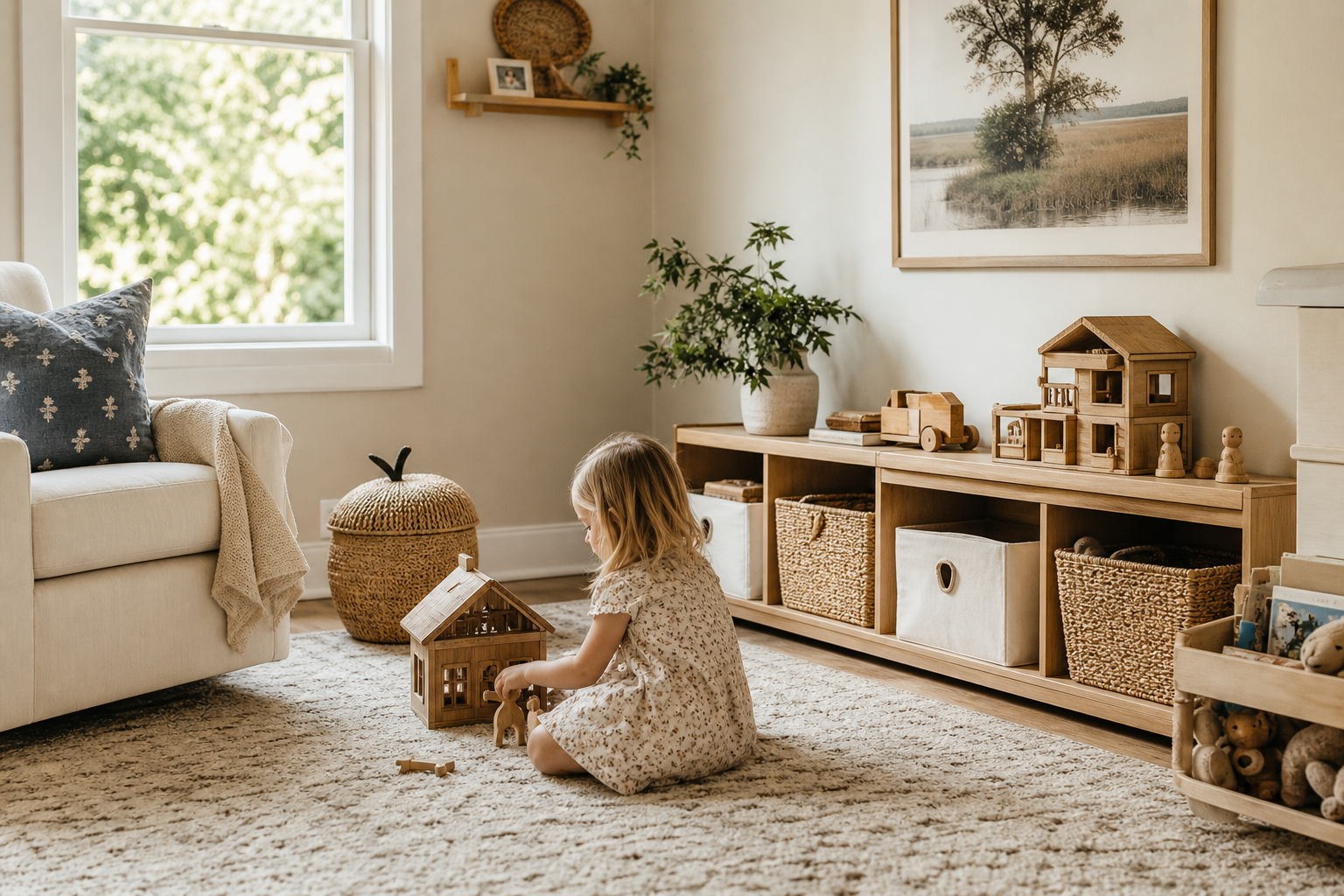
Quick Picks
Four easy swaps for the fastest pretty-practical win.
The pretty playroom problem
A playroom can be useful and still make the rest of the house feel chaotic. The issue is usually not that you need more storage. It is that the storage is not doing enough visual work.
Plastic bins, random baskets, half-open toy boxes, and too many small categories on display can make even a clean room feel busy. A prettier setup does the opposite: it groups toys into clear zones, hides the messy categories, and lets the room reset quickly at the end of the day.
This guide is for the very common version of a playroom that is not really a separate playroom. It might be a corner of the living room, a loft, a basement area, a nursery wall, or the side of the family room that everyone sees all day.
How we chose these playroom finds
The best pretty playroom storage has to do two jobs at once: work for kids and calm the room down for adults. I looked for pieces that solve real toy problems without making the space feel like a preschool classroom.
The edit prioritizes:
- Low storage kids can reach on their own
- Closed or semi-closed bins for visual clutter
- Warm neutral materials like canvas, wood, seagrass, acrylic, and soft upholstery
- Pieces that work in shared family spaces, not only dedicated playrooms
- Storage that helps with toy rotation, quick cleanup, and small-category chaos
- Amazon-friendly options first, with premium upgrades only where they make sense
The formula that works
The most reliable setup is simple:
- One low shelf for the toys kids use every day.
- Matching closed bins for categories that look messy when exposed.
- One or two woven baskets for oversized toys, stuffed animals, blankets, and quick resets.
- A few visible pretty things like books, wooden toys, puzzles, or baskets.
- A hidden rotation zone for the toys that do not need to be out all week.
That combination gives kids independence without turning the room into a wall of visual clutter.
Start with zones, not products
Before buying anything, decide which toy categories actually need a home. Most playroom mess comes from categories that are too broad or too mixed together.
Useful categories usually look like this:
- Blocks or magnetic tiles
- Cars, trains, or animals
- Dolls and doll accessories
- Dress-up clothes
- Puzzles and games
- Art supplies
- Books
- Stuffed animals
- Large toys that do not fit in bins
Once you know the categories, the storage decisions get much easier. Small pieces need lidded boxes or bins. Books need shelves or ledges. Big soft items need baskets. Pretty toys can stay visible. Messy toys should go behind a closed bin.
The best-looking setup for shared spaces
If the play area is part of a living room or family room, keep the palette tight. Choose one shelf finish, one bin color, and one basket material.
A good shared-space setup might be:
- A white, oak, or natural wood cube shelf
- Cream, taupe, beige, or warm gray fabric bins
- Woven baskets in seagrass, water hyacinth, or rattan
- Minimal labels in black, brass, acrylic, or canvas
- A storage ottoman if you need the toys to disappear completely
The goal is not to make the room look like no kids live there. The goal is to make the kid stuff look intentional.
What to hide and what to display
Not every toy deserves equal visual space. A pretty playroom works best when you are selective about what stays visible.
Display: books, wooden toys, puzzles, a few baskets, larger pretty toys, and a small edit of current favorites.
Hide: tiny pieces, loud packaging, mismatched plastic toys, extra stuffed animals, dress-up accessories, art supplies, and toy sets with lots of parts.
This is why cube shelves work so well. The top and a few open cubbies can look styled, while the rest of the shelf handles real-life clutter.
The toy rotation rule
If the room still feels messy after adding bins, the answer is usually fewer visible toys.
A toy rotation does not need to be complicated. Keep the everyday favorites out, then move the extra categories to a closet, cabinet, lidded bin, or higher shelf. Every week or two, swap one or two categories back in.
This makes clean-up easier, helps kids actually see what they have, and keeps the playroom from becoming a dumping ground for every toy in the house.
The finishing details that make it feel elevated
The small choices are what make playroom storage look more designed:
- Use the same bin style across the shelf.
- Leave a few cubbies open so the shelf can breathe.
- Avoid mixing too many basket weaves in one room.
- Face a few books forward instead of packing every book spine-out.
- Label categories simply so everyone can help reset.
- Keep the top of the shelf mostly clear.
- Put bulky toys in a basket, bench, or ottoman instead of forcing them onto shelves.
The best version is not perfectly minimal. It is practical enough for kids and calm enough for the adults who live with it.
If you only buy three things
Start with the three pieces that change the room fastest: a low shelf, matching neutral bins, and one large basket or storage bench. The shelf creates the system, the bins quiet the visual clutter, and the basket or bench handles the toys that never fit neatly anywhere.
Everything else is a refinement. Labels make cleanup easier. Book ledges free up floor space. Clear boxes keep tiny pieces from taking over. But the first three purchases are what make the room feel calmer immediately.
A simple shopping plan
If you are starting from scratch, buy in this order:
- A low shelf that fits the wall and gives kids access.
- Matching bins for the majority of the cubbies.
- One woven basket for oversized toys.
- Labels once you know the categories are working.
- A storage ottoman or bench if the play area is in a main living space.
That order keeps you from overbuying small organizers before the main system is in place.
The Full Edit
The Grown-Up Cube Shelf
Product: IKEA Kallax or similar cube shelf with neutral basket inserts
A cube shelf is one of the easiest ways to make a playroom look intentional because it gives every category a home. The key is pairing open shelving with matching closed bins so toys are accessible to kids but hidden from the room.
Best if you want one system that can handle books, puzzles, blocks, dolls, dress-up accessories, and random toy overflow.
The Canvas Bin Upgrade
Product: Canvas storage bins with handles
Canvas bins look softer and more furniture-like than plastic toy tubs, especially in a living room or downstairs play corner. The handle detail also makes them easy to pull out and reset at the end of the day.
Use the same color across the whole shelf if you want the cleanest visual result.
The Budget Cube Bin
Product: Neutral fabric cube storage bins
Fabric cube bins are the most practical low-lift upgrade if the toys already live in a cube shelf. They hide clutter instantly, come in neutral shades, and can be replaced without rethinking the whole room.
A good pick for toy rotation categories like cars, figures, magnetic tiles, animals, and pretend food.
The Low Wooden Toy Shelf
Product: Low wooden Montessori-style toy shelf
A low wooden shelf feels more like real furniture than a traditional toy organizer. It works especially well for fewer, prettier toys or Montessori-style rotation where the goal is to display a small edit instead of storing everything at once.
Best for families who rotate toys weekly and do not need every toy visible every day.
The Sofa-Side Basket
Product: Set of woven seagrass baskets
Woven baskets are the fastest way to make a toy corner blend into the rest of the house. They tuck beside a sofa, under a console, or next to a shelf and can hold larger toys that do not fit neatly in cube bins.
Choose lidded baskets if the space is fully visible from the main living area.
The Tiny-Piece Keeper
Product: Clear lidded organizer boxes for small toy categories
Clear boxes are not the prettiest item on their own, but they are extremely practical inside cabinets, closets, and deeper bins. They keep small categories from becoming one giant mixed-up toy pile.
Use these for Legos, doll accessories, puzzle pieces, art supplies, and game parts.
The Floating Book Display
Product: Clear acrylic wall book ledges
Book ledges make picture books easy for kids to see without taking up floor space. Acrylic versions almost disappear visually, which helps a playroom wall feel cleaner and less busy.
Keep the display edited to a few front-facing books and store the rest in a bin or basket.
The Art Cart That Rolls Away
Product: Three-tier rolling cart for art supplies
A rolling cart is helpful when art supplies move between the playroom, kitchen table, and outdoor space. Pick a neutral metal or wood-look version so it feels less classroom and more practical home storage.
Add small cups or divided bins on the top tier so crayons, markers, scissors, and glue do not migrate everywhere.
The Cleanup Label System
Product: Neutral toy bin labels or clip-on label holders
Labels are not just for aesthetics. They make clean-up easier for kids, babysitters, and grandparents because everyone can see where things go without asking.
For younger kids, use picture labels or simple categories like blocks, cars, dolls, books, and art.
The Disappearing Toy Bench
Product: Upholstered storage ottoman or bench
If the playroom is really a living room corner, hidden storage furniture does a lot of work. An ottoman or bench can hold larger toys while still reading as adult furniture when everything is closed.
Best for stuffed animals, dress-up clothes, soft toys, and bulky items that make shelves look messy.
What to Look For
- ✓ Closed bins for visual clutter, open shelves for kid access
- ✓ Neutral colors that repeat across the room instead of one-off bright bins
- ✓ Low storage kids can reach without climbing
- ✓ Soft or rounded materials if the storage sits in a high-traffic play area
- ✓ A few larger catch-all baskets for quick end-of-day resets
- ✓ Labels that make clean-up obvious for kids and adults
- ✓ A toy rotation spot, like a closet shelf or closed cabinet, for items not currently in use
Helpful Notes Before You Shop
How do you make playroom storage look less like a daycare?
Start by removing the loudest visual clutter: bright plastic bins, mismatched containers, and too many toys displayed at once. Use neutral bins, woven baskets, low wood shelving, and a small number of visible categories so the space feels like part of the home.
What is the best storage setup for a playroom in a living room?
A cube shelf with matching bins, one large woven basket, and a storage ottoman is usually the most practical setup. The shelf handles daily categories, the basket catches oversized toys, and the ottoman hides anything that needs to disappear quickly before guests come over.
Are open shelves or bins better for kids toys?
A mix is best. Open shelves are helpful for books, puzzles, and toys you want kids to see, while closed bins are better for messy categories like blocks, cars, dolls, and pretend play pieces.
How many toys should be visible in a playroom?
For a calmer room, keep fewer toys visible and rotate the rest. A good rule is to display the toys your child is actually using that week and store backup categories in a closet, cabinet, or lidded bin.
What should I buy first for a stylish playroom?
Start with the largest visual problem first. For most families, that means a low shelf and matching bins before small organizers. Once the main toy categories have a home, add baskets, labels, book ledges, or a storage ottoman based on what still feels messy.
How do you organize toys in a small space?
Use vertical storage, fewer visible toy categories, lidded bins for tiny pieces, and one attractive catch-all basket for fast cleanups. Small play spaces usually work better with a tight rotation than with every toy available at once.
The Final Edit
If you only buy three things, start with one low shelf, matching neutral bins, and one oversized woven basket or storage bench. Those pieces create the biggest visual reset because they hide the chaos, keep toys reachable, and make the whole room easier to put back together in five minutes.